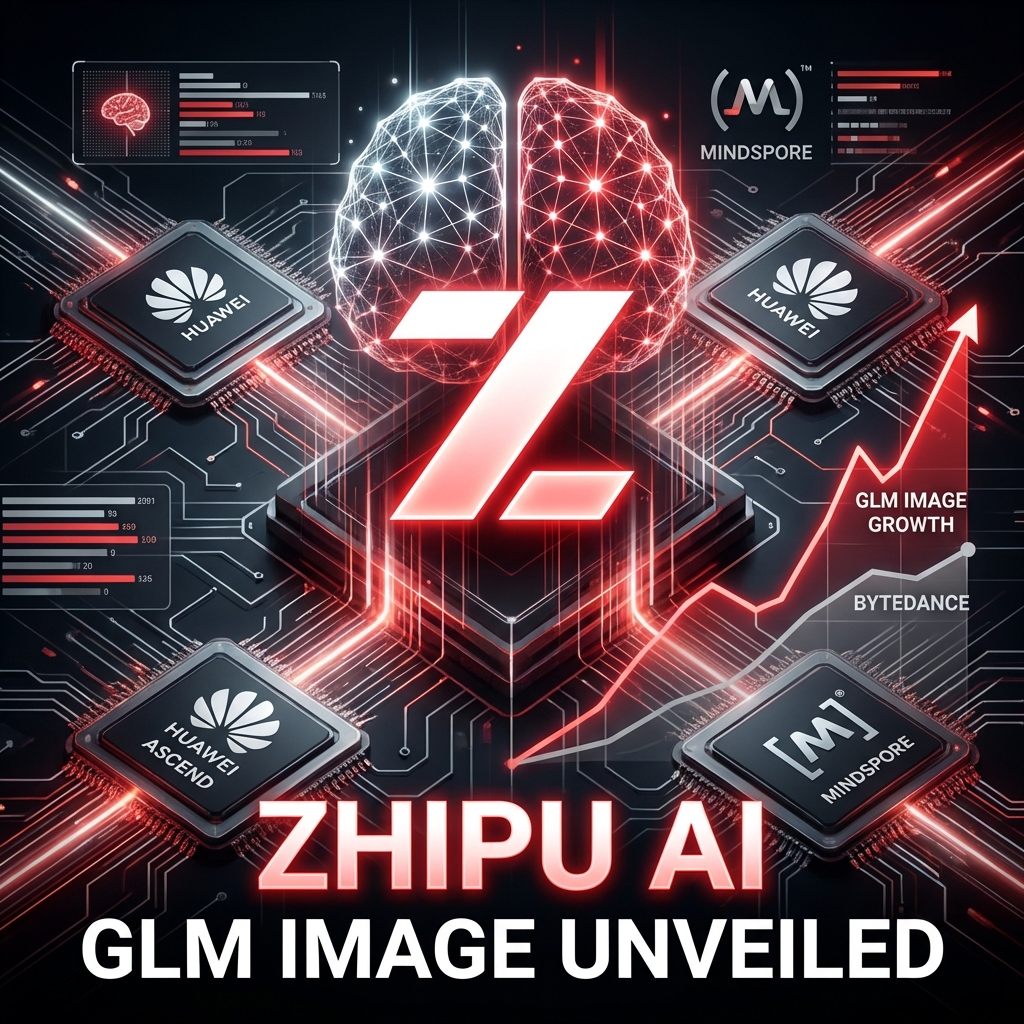
According to Zhipu, GLM Image’s text rendering and Chinese character generation capabilities led to industry leading scores among open source models
Zhipu AI, a Chinese AI firm, announced that the new image generations model is a result of training on chips by Huawei Technologies, and this makes it the first strong open source model that is fully based on the domestic training infrastructure.
In a statement on Wednesday issued by its headquarters in Beijing, the firm, still riding the wave generated by its initial public offering in Hong Kong, declared the milestone a success in proving the practicability of designing strong multi modal models without the use of US chips, following Beijing's aim to develop a self reliant semiconductor sector in the Chinese AI industry due to export restrictions imposed by the US.
According to Zhipu, the whole training process of GLM Image, from data preparation to the final training, was performed on Huawei’s Ascend Atlas 800T A2 server, which used in house Ascend AI processors, and the MindSpore framework, which is an all in one framework developed by Huawei.
Do you have questions about the biggest topics and trends from around the world? The answers can now be found with SCMP Knowledge, our brand new content platform of explainers, FAQs, analysis, and infographics produced by our award-winning team.
'We hope this can serve as a valuable reference for the community to tap into the power of computing in our country,' Zhipu said.
Powerful multi modal models of AI that are capable of handling, processing, and working with text, voice, images, as well as videos are believed to be the next generation of models of artificial intelligence by experts in the field of AI.
Zhipu’s model has a hybrid structure comprising both autoregressive components and diffusion components. This model allows Zhipu to achieve the multimodal capabilities through the Google DeepMind’s Nano Banana Pro model, which has the skills to produce images as well as text.
Zhipu claimed that the model scored industry leading performance metrics for open source models in text rendering and excelled particularly well with Chinese character generation. Notably, despite these achievements, the performance metrics indicated that the model trailed ByteDance's own image generation model, Seedream 4.5.
The type of chips used to train ByteDance’s model is not specified.
On Tuesday, the US government officially allowed the sale of the second most advanced chip manufactured by Nvidia, the H200, to China. This is despite the prolonged campaign by the firm.
But Beijing has instructed customs officials not to allow the import of this chip and also informed tech firms that it would only allow orders of H200 under extraordinary circumstances, Reuters reported on Wednesday.
The ascended chips developed by Huawei were already successful in training smaller models like those used in Zhipu’s GLM-Image. However, their ability to train their flagship series of large scale models like the GLM 5 had yet to be tested. This was according to a source with information on the matter.
Nvidia chips lead the development of advanced models in China, and of Chinese AI models that have publicly acknowledged being trained using Chinese chips, a number of which include second-level model players such as iFlytek, which was blacklisted by the US government in 2019. Zhipu was included in the same list in January of last year.
Beijing has also been encouraging Chinese technology companies to use domestic machine-learning frameworks like "MindSpore," which is developed by Huawei, in place of TensorFlow and PyTorch, which are Google and Meta Platforms' offerings.
However, adoption of MindSpore remained modest compared to the more established frameworks from the US, as per data from open source platform developers.
👉🏻 Found this article interesting? Follow us on Facebook, Twitter and whatsapp to read more exclusive content we post.