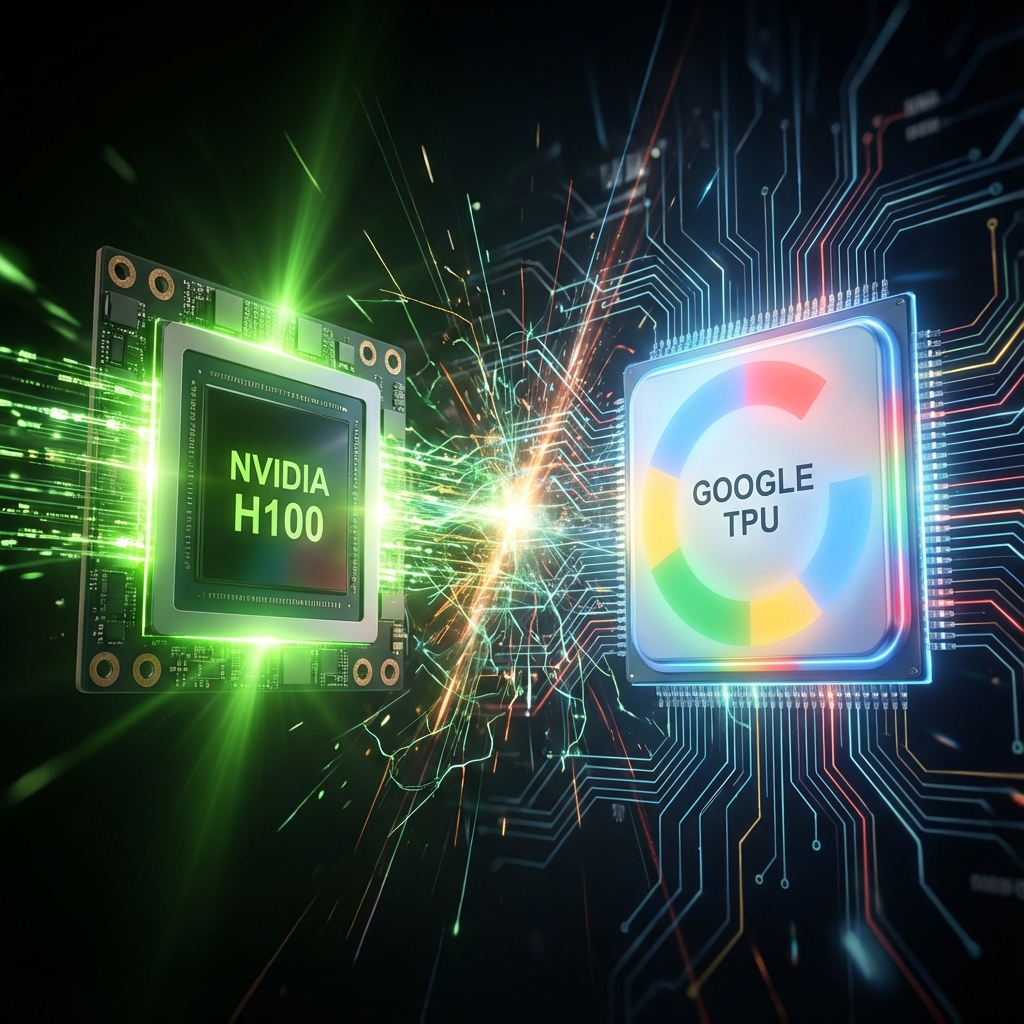
In a milestone that sounds almost like science fiction, Nvidia-backed startup Starcloud has successfully trained and run an AI model from outer space, pushing the idea of space based data centers from theoretical possibility into real world reality. The Washington-based company says this is the first time a powerful large language model has operated on a high-end Nvidia GPU while orbiting Earth and it may mark the start of a new chapter for how the world handles its growing demand for AI compute.
Starcloud’s first satellite, Starcloud-1, launched last month carrying an Nvidia H100 GPU far more powerful than anything that’s ever been sent beyond the atmosphere. Once in orbit, the satellite began running queries on Gemma, Google DeepMind’s open LLM. The moment it first responded, sending back a playful greeting “Greetings, Earthlings!” Starcloud knew they had crossed a historic line: for the first time, orbital computing using a modern AI chip was actually working.
The company’s goal is ambitious: prove that space, not Earth, may become the future home for large-scale computing. Traditional terrestrial data centers already strain local power grids, swallow huge amounts of water for cooling, and generate significant emissions. The International Energy Agency warns that data centers’ electricity demand could more than double by 2030, a crisis waiting to happen.
Starcloud CEO Philip Johnston argues that the solution might literally be above our heads. In the vacuum of orbit, satellites can soak up constant sunlight, avoid weather disruptions, and run massive compute clusters without placing stress on any local energy grid. Johnston even claims orbital data centers could end up with energy costs ten times lower than Earth based ones.
To prove the concept, Starcloud didn’t just run Gemma; it also trained NanoGPT a compact model from OpenAI co-founder Andrej Karpathy, on the complete works of Shakespeare. The model began speaking in Shakespearean English from space, which is an achievement in its own amusing way.
Backed by Nvidia’s Inception program, Y Combinator, and Google’s startup accelerator, Starcloud now wants to build something almost unbelievable: a 5-gigawatt orbital data center powered by massive solar arrays stretching roughly 4 km across. If built, it would produce more power than the largest power plant in the United States.
These orbital data centers could support a range of commercial and defense applications. With real time observation capabilities and AI running on satellite, systems could instantly detect wildfires, locate capsized boats, or process satellite imagery without sending data back down for analysis. Starcloud has already integrated telemetry into the LLM, letting it answer questions like “Where are you now?” or even the more whimsical “What does it feel like to be a satellite?”
The company is preparing its next launch for October 2026, which will include multiple H100 chips and Nvidia’s upcoming Blackwell platform. It will also carry an onboard cloud module from Crusoe, allowing customers to run AI workloads directly in orbit.
But the vision isn’t without risks. Morgan Stanley analysts warn that orbital data centers face harsh radiation, maintenance challenges, space debris, and regulatory uncertainty. Yet despite the hurdles, interest is exploding. Google’s Project Suncatcher, Lonestar’s lunar data center, Aetherflux’s newly announced orbital mission, and even rumored ambitions from OpenAI’s Sam Altman all point to a future in which computing might increasingly move off-planet.
Nvidia’s Dion Harris summed up the moment simply: from one small satellite, the industry may have taken “a giant leap toward orbital computing.”