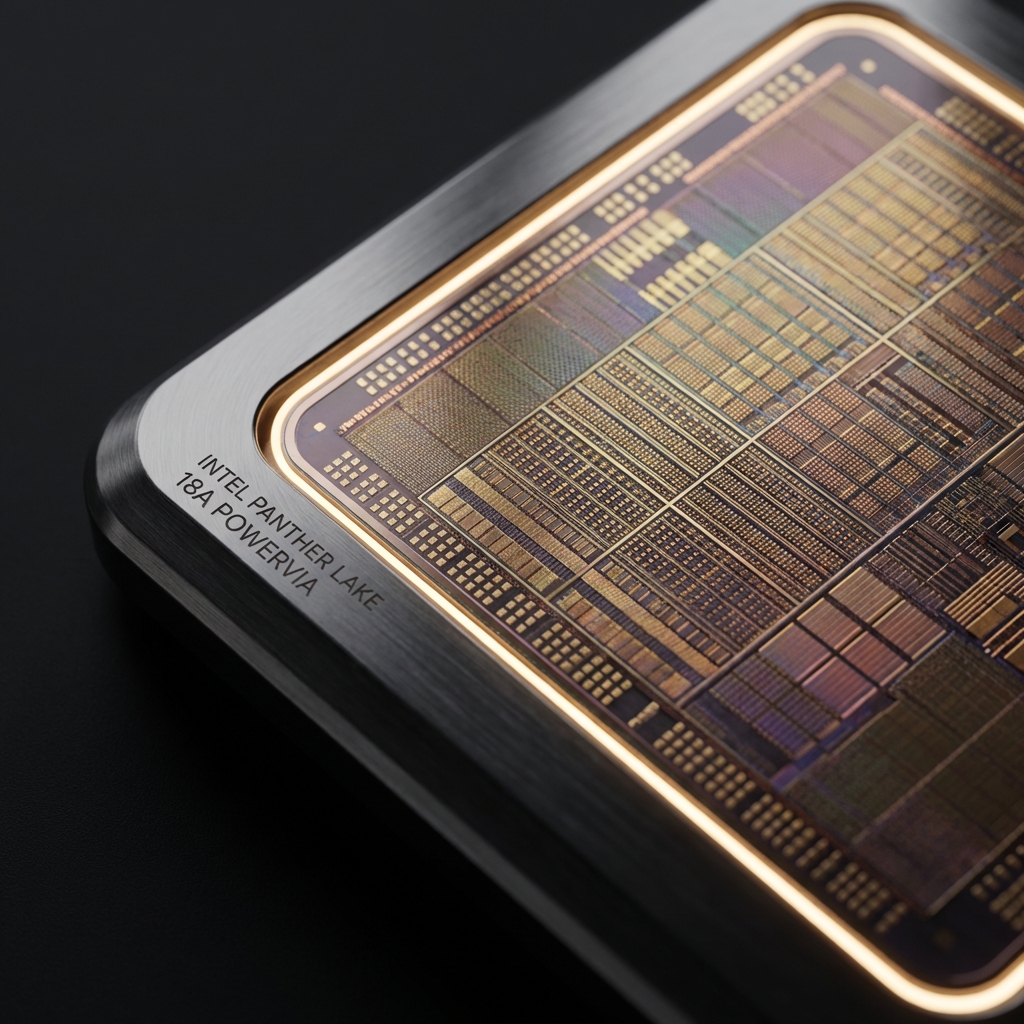
Intel's backside power delivery system was the first on the market.
The introduction of Intel Corporation’s (INTC 17.03%) new range of Panther Lake processors, which feature the semiconductor maker’s most recent and most advanced Intel 18A process node, marks a significant turning point on its quest to compete favorably with TSMC. Not only has it managed to catch up on the process advantage TSMC has enjoyed over the years, but it has done it first on its new range featuring its backside power delivery
A Year Ahead of TSMC
Modern chips all place their interconnects, or wires connecting various pieces within the chip, and their power connections in the same layer. In the past, this may not have made a significant difference. But as microchip design becomes denser and more complex, it leads to chaos within the connection points and causes communication interference.
This is where backside power delivery comes in by moving power wires to the backside of the chip, with interconnects remaining intact on the frontside, it becomes easier.Creating such a chip is complex enough, thus explaining why it has never been done until now.
Intel's version of backside power delivery is called "PowerVia," and it arrives alongside Intel's 18A process technology. Laptops containing Intel's Panther Lake CPUs, where we can expect to find it, will ship later this month, so it's one short step away from turning up in tens of millions of devices worldwide. The upside is significant, especially in applications where power saving is important.
With Intel's early testing, its version of backside power delivery, "PowerVia," has resulted in a 6% increase in chip frequencies, which means that simply put, the chip runs faster, given the same amount of power, or the reverse: it requires fewer resources, given the same desired chip frequencies, than a chip that doesn't use it.
TSMC is also working on their BPDI, although. The leader in the foundry industry is way behind Intel. TSMC's upcoming A16 Process node will enter production towards the end of 2026 and uses Super Power Rail, their version of this technology. Intel will have a head start of between 6-12 months should A16 Process enter production as planned.
Innovation is back at Intel
But one thing that is for sure, Intel's monopoly of backside power delivery won't extend beyond 2026. At the very least, the company's success in launching the Intel 18A process using the technology is a sign that its innovation engine is back up and running.
Next on Intel's roadmap is the Intel 14A process, due in 2027. If all goes well, Intel will again beat TSMC to market, this time with High NA EUV lithography. TSMC might not introduce High NA EUV tools until 2028, which would give Intel at least a one-year lead.
As Intel rushes to find external customers for its foundry, the company's trailblazing on backside power delivery and High NA EUV could lay the road to turning the current foundry business struggles into long-term success.
Australians, where do you think is the best place for an investment of $1,000 now?
When investing expert Scott Phillips has a stock tip, it can pay to listen. After all, the flagship Motley Fool Australia Share Advisor newsletter he has run for more than a decade has delivered paying members stock picks that have doubled, tripled or even more.
👉🏻 Found this article interesting? Follow us on Facebook, Twitter and whatsapp to read more exclusive content we post.