Chinese Scientists Develop Cheaper, Safer Alternative to Lithium-Ion Batteries
Chinese researchers unveil breakthrough sodium sulfur battery design that could reshape energy storage.
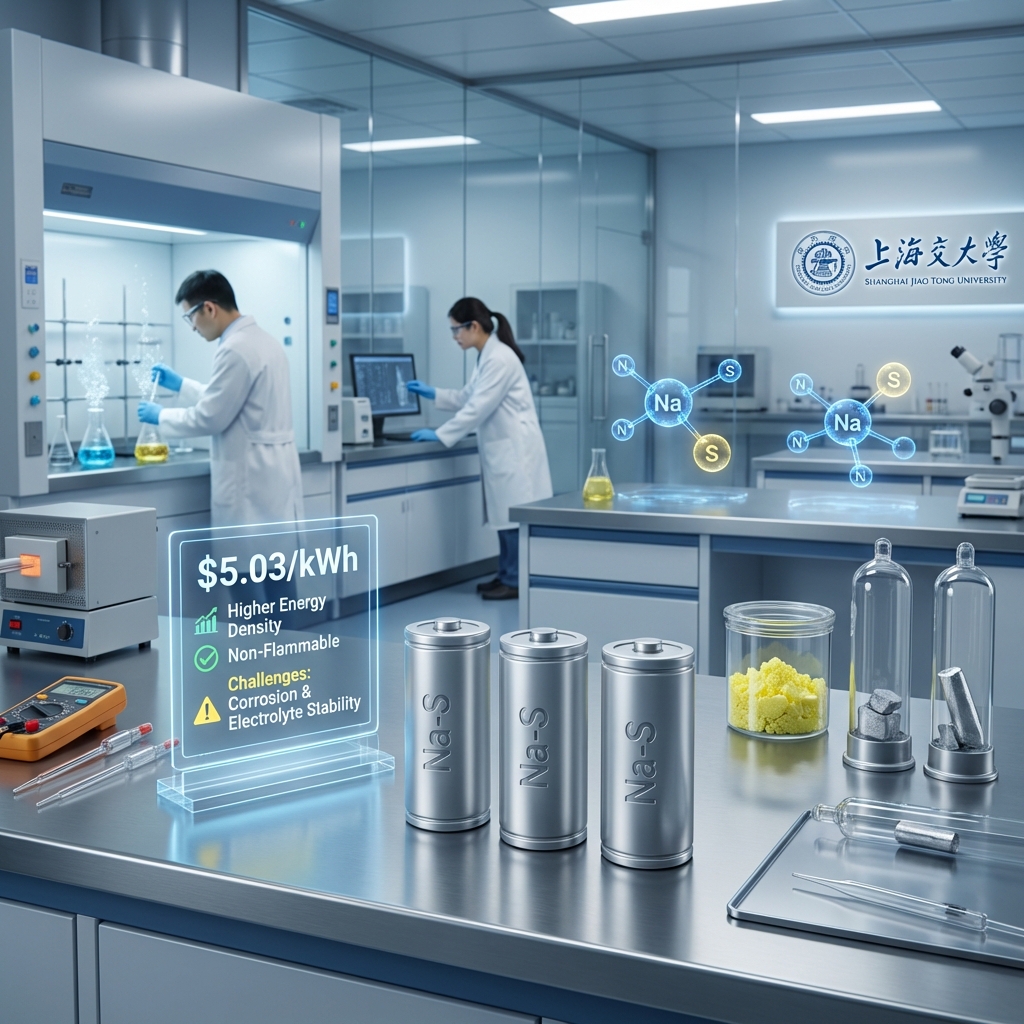
A major breakthrough in the battery technology has been attained by researchers at Shanghai Jiao Tong University, who have designed a sodium sulfur battery that has higher power density and discharge ability compared to the existing designs of batteries in the market. This innovation can serve as a long awaited replacement for the widely used lithium-ion batteries.
With the ever increasing shift towards electric cars and renewable sources of energy being witnessed across the world, there has been an explosive demand for efficient energy storage devices. Although lithium-ion batteries are currently unbeatable, these components possess severe limitations, such as the dangers of flames, occurrences of thermal runaway, and rising prices due to heightened demand across the world.
Now, sodium sulfur batteries enter the picture. Sodium is widely available, which is much cheaper compared to lithium.
Overcoming Old Obstacles
In sodium-sulfur batteries, previous solutions were plagued with a fundamental challenge. The challenge involved the high amount of sodium needed, which at times was ten times more than lithium, but with a lower voltage of below 1.6V.
To overcome this challenge, the Shanghai group resolved the issue using S0/S4+ redox chemistry. Its novel chemistry consists of an aluminum foil anode, S8 cathode, and sodium dicyanamide in a non flammable chloroaluminate electrolyte. In this case, the dicyanamide ion enables S/SCl4 chemistry on the cathode surface, in addition to enhancing both sodium electrodeposition and stripping on the surface of the sulfur electrode.
The achievements were remarkable. The maximum energy density reached was 1,198 Wh/kg; discharge capacity: 715 mAh/g; and maximum power density was 23,773 W/kg. Incorporated into the cathodic material was a Bi-COF catalyst. The result was a discharge capacity of 1,206 mAh/g and an energy density of 2,021 Wh/kg.
One reason that may be most attractive is the expense: only $5.03 per kilowatt hour, a tenth the cost of lithium-ion batteries. The non flammable electrolyte also solves important safety issues.
Challenges Remain
Barriers still need to be overcome before commercial production can be achieved. "Well, the electrolyte is very corrosive stuff and very difficult to handle," Myles said. It is also still unclear if the electrolyte is stable in the long run. However, the researchers were optimistic that these problems can be overcome.
If realized, this technology holds the promise of revolutionizing energy storage solutions ranging from consumer devices to electric cars, and even storage solutions for the power grid. With the pressure on the supply of lithium, technologies such as this sodium-sulfur battery would prove to be essential for the creation of a more sustainable energy future.